Desperation of Poverty Life (2056/2026)
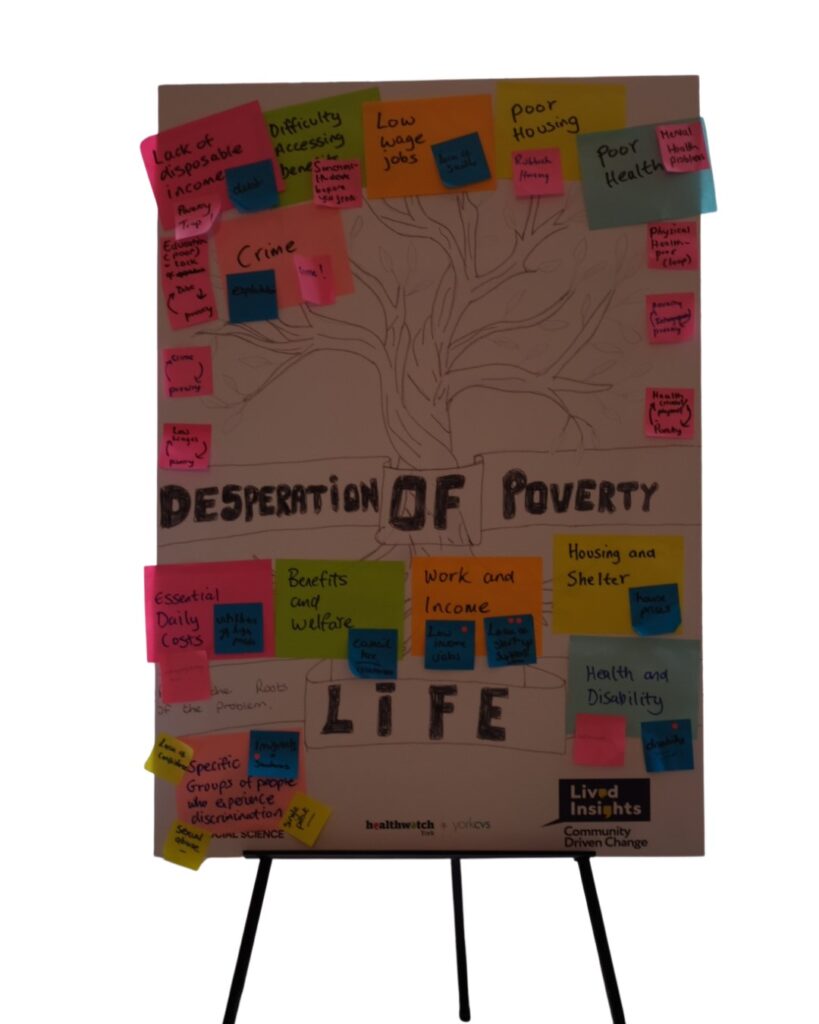
The research group shaped the content and design of this webpage and report. Together, they chose the project title, language and visual identity.
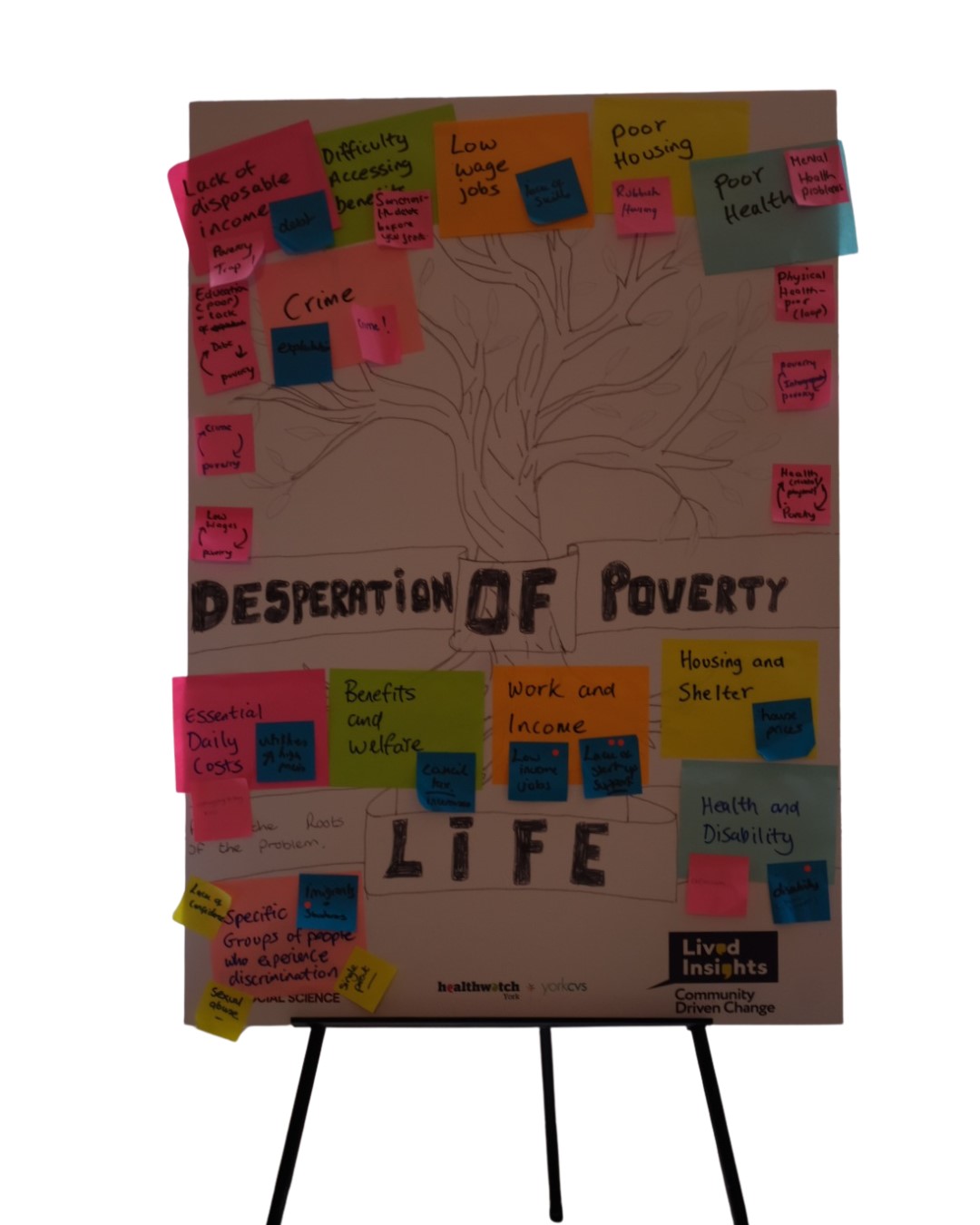
They named the project 'Desperation of Poverty Life' to reflect the wide reaching impact of poverty and chose a tree illustration, created by one of the participants, as the project logo.
Every decision was made together to ensure the report and webpage reflect the group's shared experiences and voices.
“This was a new adventure for me…when I joined the group I was unsure of how I could contribute as my self-esteem was low. Being part of the group, sharing experiences was invaluable to me. I quickly realised that I had much to learn and much to give in return.”
THE PROJECT
This research project, funded by the Lloyds Bank Foundation, focused on the Local Welfare Safety Net in York - a collection of locally designed schemes that support households facing financial hardship beyond the mainstream benefits system.
The project focused on learning from people who have experienced poverty and used the welfare system, using their lived insights to improve local support, tackle the underlying causes of financial hardship and reduce poverty through changes in policy and community-led solutions.
What makes this project different from traditional research models is that it was designed, facilitated and analysed by people who have direct experience of accessing the welfare system, making the findings more credible, representative and better reflect the real experiences of those most affected.
The Community Research Café
Workshops were held at St Deny’s Church Hall on Walmgate, a central community space in York with regular drop-in sessions. The informal setting helped people stay connected, support each other and share their personal experiences openly in a safe and respectful environment where everyone could contribute equally.
The Community Researchers
We brought together a group of Community Researchers - local people with lived experience of financial hardship - to give people a say in the issues that affect them. They took the lead in deciding what to explore and how, with support and training along the way. Together, we gathered insights based on real-life experiences.
“It’s desperation, that’s what it feels like being in poverty.
It’s a desperate place to be”.
The Partnership
The project was a collaborative effort involving seven partners: The University of York, City of York Council, Age UK York, Citizens Advice York, York Foodbank, Peasholme Charity and the Welfare Benefits Unit.
Special thanks to Healthwatch York for co-facilitating the workshops and thank you to the funders - The Lloyds Bank Foundation - for making this research possible.
 .
.
WHY THIS RESEARCH MATTERS
This research is important because people who have used the benefits system want to see improvements that make it work better for everyone. It aims to improve how local support schemes are designed and run so they better reflect the challenges people face.
This includes Discretionary Support, such as the Household Support Fund and the Local Welfare Assistance Scheme, as well as Council Tax Policy, which covers Council Tax Support, Discretionary Council Tax Relief and how council tax is collected. The aim is to make these schemes more effective at preventing poverty and helping people avoid problems like council tax arrears, which can become a major debt in York especially when court and bailiff fees are added.
Research Methods and Approach
Spider Diagrams: Using spider diagrams, participants drew on their own experiences to explore Discretionary Support. They mapped out key problems and possible solutions, helping to show where the system can be difficult to navigate and how it could better meet people’s needs.
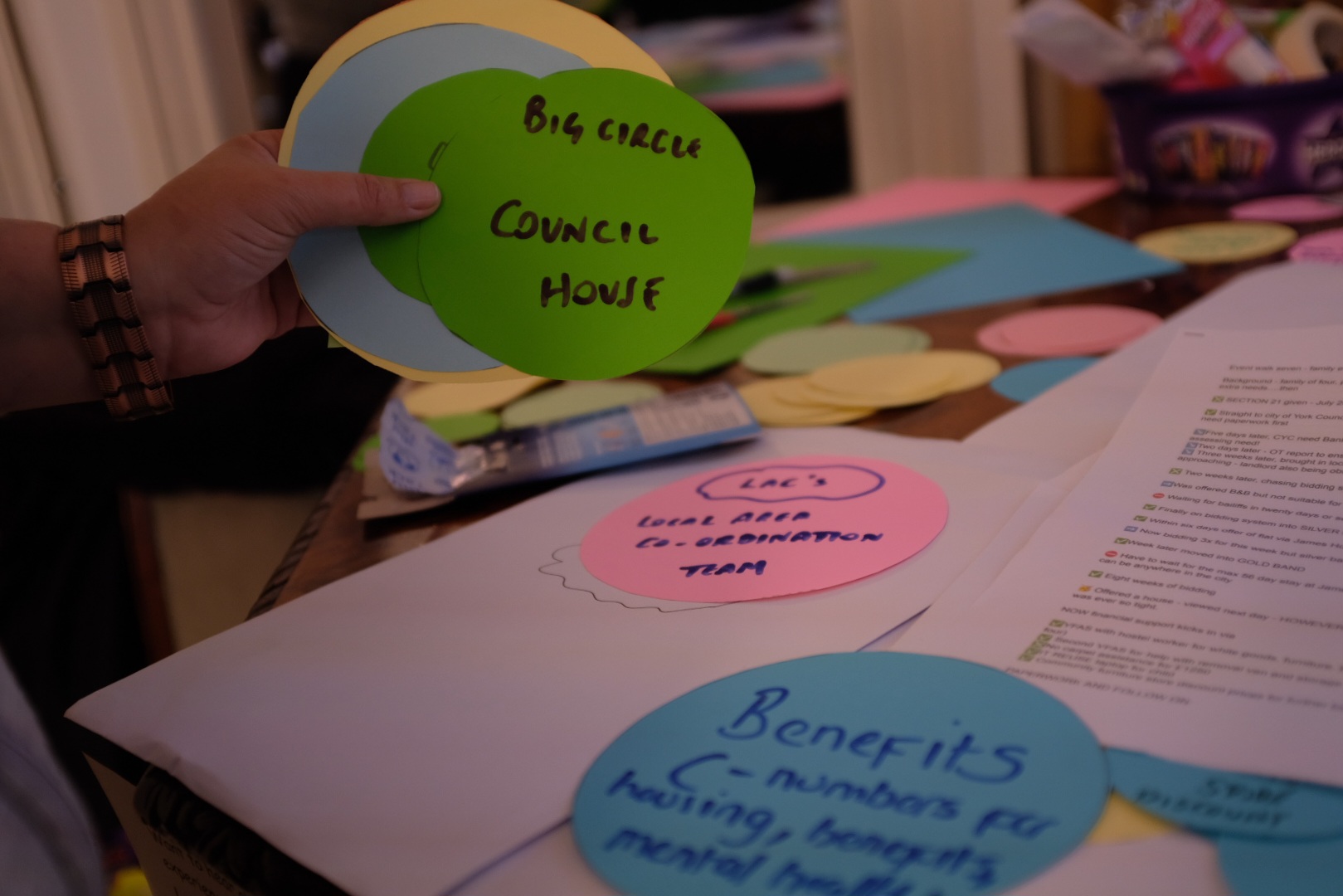
Mapping: We used mapping and roleplay to explore how people move through the welfare system. Participants used cardboard circles to show how important different services are and placed them on the floor to show how easy or difficult they are to access, grouping similar services together and identifying what was missing. Working through real-life situations, such as domestic abuse or eviction, helped show how services connect and where gaps exist. This led to a clearer picture of how support works in practice and helped inspire the Snakes and Ladders game to show how unpredictable the system can be.
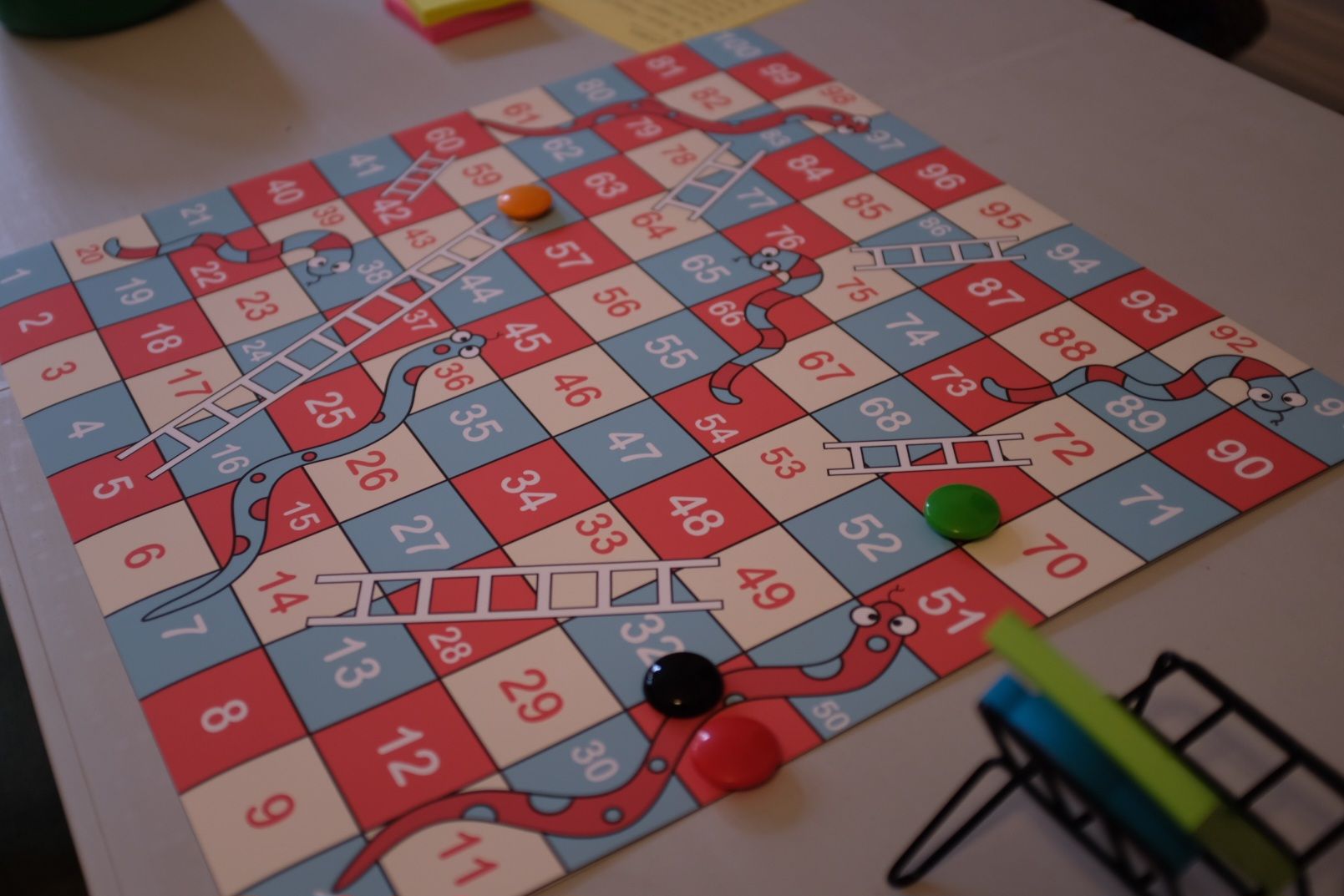
Snakes and Ladders: We played a game that shows the ups and downs of the local welfare system. Snakes represent things that set people back, such as delays in benefits or unexpected crises, while ladders represent support like services, people, or processes that move things forward. The game helped highlight where the system creates barriers and where it helps people progress, showing where improvements are needed.
“The energy in the room showed how passionate people are about addressing problems that people are facing.”
Rose, Buds and Thorns: In small groups, we reviewed everything we had learned and sorted ideas into “roses” (what works well), “buds” (what could be improved), and “thorns” (problems and barriers). We discussed poverty, inequality, gaps in support and ideas for change, including specific feedback on Discretionary Support and Council Tax Policy. We then grouped related ideas into themes and checked findings across groups, which resulted in 15 shared themes.
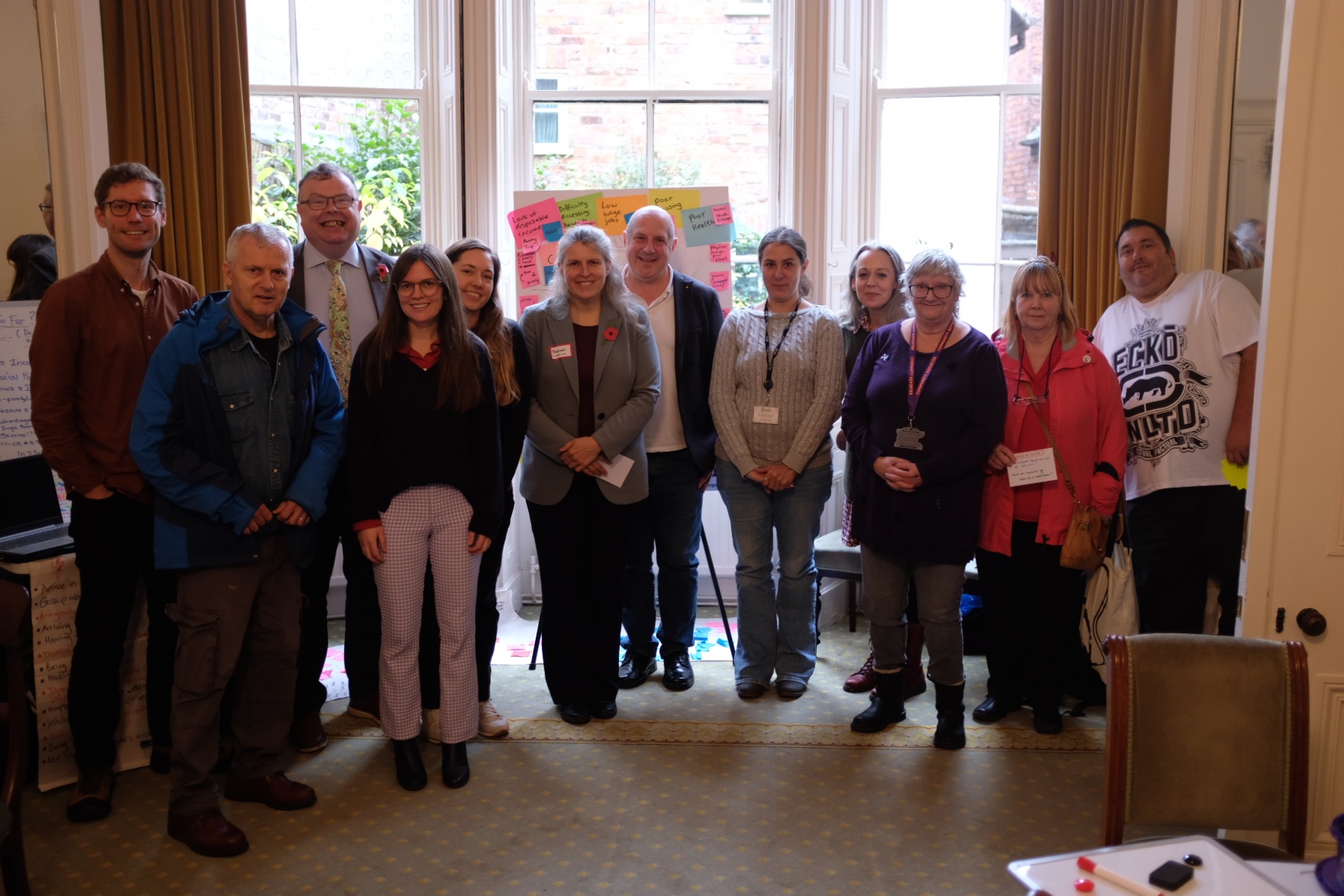
Festival of Social Sciences Event: As part of the Festival of Social Science 2025 (Economic and Social Research Council), we ran a participatory event 'Breaking Down Barriers - Exploring access to local welfare support in York'. Participants took part in activities such as a cause-and-effect tree, Snakes and Ladders, a spider diagram on Discretionary Support, role-play scenarios and QR-code quotes. Attendees shared their experiences, ideas and feedback throughout.
Special thanks to York Medical Society for hosting such a great event in a fantastic, accessible city-centre venue.
RESULTS, FINDINGS AND SOLUTIONS
The findings, along with the group’s ideas, solutions and proposed actions, highlight two main areas for change that link directly to improving the welfare system.
At the operational level, this includes practical, low-cost improvements such as simplifying forms, improving communication and offering more patient, supportive interactions.
At the systemic level, the findings show how day-to-day challenges connect to wider policy issues, pointing to broader strategies needed to reduce and ultimately address poverty.
Discretionary Support and Council Tax
The research examined how local policies such as the Household Support Fund and Local Welfare Assistance operate in York, highlighting both strengths and challenges. Participants reported positive experiences of schemes like the York Financial Assistance Scheme (YFAS) and the Household Support Fund, which provided practical help such as furniture, vouchers and debt relief, sometimes delivered quickly and effectively.
However, concerns were raised about accessibility, fairness and consistency. Digital requirements made the Household Support Fund difficult to access, payments were often poorly timed and Council Tax processes were described as intimidating and unclear. Overall, participants called for simpler, clearer and more trust-based systems that better reflect people’s lives.
Loops, Clusters and Themes
Group discussions showed that poverty often works in reinforcing cycles that are difficult to escape. Participants highlighted key loops, including education and poverty, health and poverty, crime and poverty, and low wages leading to debt, where one issue continually feeds another and deepens disadvantage over time.
Alongside these, the group identified clusters of related challenges in the welfare system. Through a collaborative process of sharing and refining ideas, these were developed into broader themes, helping to clarify the issues and generate practical, community-led solutions.
Ideas, Actions and Change
The findings highlight key themes from group discussions, showing both challenges in York’s welfare system and opportunities for improvement.
Four main themes emerged: Staff and Approach (the need for kindness and empathy), System Simplification and Access (barriers caused by complex processes), Agency and Lived Experience (the value of involving residents in shaping services) and Resource Management and Financial Support (the need for long-term responses to multi-dimensional poverty).
Overall, while the system provides important support, participants called for simpler, more transparent and more compassionate approaches that better reflect people’s lived experiences.
Get Involved
If you have experience of financial hardship or poverty and live in York and you’d like to join a supportive group of people working together to share experiences and help improve support services, then why not come along to our Community Café? Everyone is welcome.